Näytetään tekstit, joissa on tunniste open heart bhumi model. Näytä kaikki tekstit

maanantai 15. helmikuuta 2021

Nagarjuna Describes Going Through Bhumis


Nagarjuna Describes Going

Through Bhumis


From Dharmadhātustava by Nagarjuna


Just as a lamp that’s sitting in a vase

Does not illuminate at all,

While dwelling in the vase of the afflictions,

The dharmadhātu is not seen.


From whichever of its sides

You punch some holes into this vase,

From just these various places then,

Its light rays will beam forth.


Once the vajra of samādhi

Has completely smashed this vase,

To the very limits of all space,

It will shine just everywhere.

. . .

Just as when the waxing moon

Is seen more in every moment,

Those who’ve entered on the bhūmis,

See its increase step by step.


On the fifteenth day of waxing,

Eventually, the moon is full.

Just so, when the bhūmis’ end is reached,

The dharmakāya’s full and clear.


perjantai 30. lokakuuta 2020

About Bhumis and Prejudice


About Bhumis and Prejudice


I've taken a long break of bhumi work. I haven't done bhumi analyses for... at least a year. I did so many of them, literally around 5000 during the past several years, so I got fed up and needed a break. Then, this past week I've noticed myself thinking of doing bhumi analyses again and today I thought of publishing a series of bhumi analyses of well known teachers. That didn't go well back in 2016... at all... For those who don't know what happened back then, I'll tell you.


In late Summer of 2016 I published couple of dozen photographs of well known buddhist and other spiritual teachers, all very public figures, with my bhumi analyses according to the Open Heart Bhumi Model. I've discussed this model with great detail in my freely available book What's Next? On Post-Awakening Practice.


I published the photos in my blog each with a bhumi measurement. The series included for example, His Holiness the Dalai Lama, other leaders and Tibetan buddhist teachers, Thich Nhat Hanh, Ramana Maharishi, bunch of zen teachers, theravadans and so on. I'm trying to come up with the most fitting description how my "Bhumi Study Series" was received by the internet. The word that best describes it, is: shitstorm.


I had never witnessed aggressive religious fundamentalism before but I sure witnessed it back then. It came to me as a total surprise. My point of view was that I felt I was trying to make sense of the path and stages of the spiritual path from unawakened state to fully enlightened state, also known as buddhahood. Even though buddhism offers a number of path maps with stages, these are not used by anyone so the whole discussion about shifts or awakening experiences is a completely grey area. Out of many millions of meditators in buddhism, not to mention other systems, few know where they are on the map or whether they even are on the map. I had received this bhumi mapping system (that I've explained in my book) from my gurus, so I knew I had a solution. I was simply trying to help and offer a solution that worked for anyone, regardless of their chosen methods or paths. I really thought I was doing everyone a big favour. Fundamentalists didn't see it that way and a massive shitstorm broke. They hated it and instantly rejected it. In their mind, I had crossed a sacred line and discussed the levels of attainment of their precious gurus. That was something they weren't going to tolerate. It was too much for them so they instantly called it bogus, branded me crazy and banned me from their discussions.


I'm not going to lie and say that it didn't hurt. It hurt a lot. That was real aggression and I got lots of it. Had I been on sight, I'm pretty sure I would have been chased and attacked. At the same time these emotionally charged reactions confirmed to me what I had analysed in my thousands of analyses. Bhumi openings or their closedness, and the degree of purification of mind (i.e. bhumi perfection), is reflected in the actions of men, and since I was treated very meanly, it was and still is an indication that my analyses not only about the various spiritual leaders but also their students, were correct. For some time I tried to have a dialogue with these people, explaining how it worked etc. But as they weren't capable of it, I decided to remove the analyses from my blog and find a hole to lick my wounds.


I still find it hard to believe how and why(!) would anyone be so offended about 1. differences in view which in this case meant that even if attainments are not traditionally openly discussed, they still can be discussed, and 2. things that could be empirically tested, tried and learned. To me, who am a bit of an engineer, it was mind boggling why would anyone get mad about a thorough explanation how it all works... But that was exactly what I didn't understand about the samsaric mind before, at least not well enough, so I stepped right into it...


See, when you've invested all your life into any form of religion or spirituality that you think is going to take you ”all the way”, even if you don't know exactly how and when, and then comes in some bastard who maps your favourite religious leader very low on the spectrum, it can piss people off!!! Because of the time-money-energy-investment and religious belief, very few people who have been following this or that method for many years, are willing to admit that they've wasted their time-money and energy. Samsaric mind, even that of ”practitioners”, gets attached and attachment as dharma teaches us, makes people angry.


I can and do symphatize with that, as I feel I wasted most of my 8½ years of continuous retreat doing practices that were only distantly relevent, or actually not very relevant at all with my wish to get awakened. I wasted my best years because I believed as blindly as so many out there. I thought I was open minded the whole time but really, I was fixated, I was attached, I was a believer... I trusted without the slightest doubt training systems that ”had been passed down in an unbroken lineage since the founder of buddhism to our generation” and taught ”practices that were time tested” and therefore offered very reliable tools. I heard that sales pitch so many times and bought it without questioning... until several years and literally twenty-four-thousand hours of practice later... No, it didn't work as promised... My time-energy-and money was mostly wasted. I was pissed off about that for years myself!


Later when I started to talk about this with others, I met many people who had been disillusioned about the ”tradition” like myself. It was clear that there was something very wrong with how the basics were or weren't taught by the traditions. I say traditions in plural because the same problems exist everywhere. I base this not only on my own bhumi analyses but also in discussions with hundreds of practicioners and many teachers of various incl. Tibetan buddhism, zen, theravada, advaita and so on. It is actually interesting how some come to see the issues or problems in training methods, their teachers, their communities and their culture, while others don't. I think this has a lot to do with readiness or merit as it is commonly known. If you really want the truth, you can't settle for poor answers. A lot of people start with that pure need for knowing the reality but get distracted along the way, usually with all the externals such as forms and rituals, authorisations, hierarchiesand stuff like that, and end up fundamentalists, usually subtly.


So, anyway, that is what happened back in 2016 and that's behind me now. However, now that I've taken a break of bhumi work and feel refreshed about it, I cannot help thinking about the benefits of the 13 Bhumi Model. It is not particular to Pemako Buddhism or me. It is universal. We all have bhumis because we all have the same energy body with channels and centers. We all have bhumi centers that can be perceived. We all have bhumi centers that are either closed or open, and if they are open, they are on their way to be entirely purified, or perfected. Open Heart Bhumi Model is an excellent model, an excellent path map. It matters not what people think about it because it works... And it applies to everyone out there...


I wouldn't want to start another shitstorm but I do wonder how could I represent the bhumi model in a way that is attractive and interesting to people.


Much love and blessings. You are the real deal.


Kim Katami, 23.10.2020


lauantai 22. heinäkuuta 2017

When Discrimination Fails Dharma

When Discrimination Fails Dharma

One of the biggest problems buddhism has is the strict authoritarian position of the teacher, or guru. As a tantric buddhist teacher myself I certainly do not deny the importance of guru but it is too often the case that the role of the guru becomes considered too widely than it should. Usually teachers are founders and directors of their own dharma organisations, on top of being the sole person who guides the sangha spiritually. Often teachers get way too much power. When this is combined with too little of an attainment of the teacher, all kinds of problems start arising.

Bad apples

Recently I read about Sogyal Rinpoche's extensive misconduct. A similar case of Lama Norlha Rinpoche was reported only two months prior. Reading stuff like this is like reading of the ancient Roman emperors who did all the crazy things they could imagine with the expense of others. I wonder how far it would go without any moderation. When someone with too small of an attainment and with too little motivation to attain buddhahood, becomes unchallenged and too comfortable, really bad things can happen. This happens because they don't continue their own practice (that would keep their minds clear enough to keep their conscience in the picture) and because they are not living buddhas (even though their followers often like to, or even insist thinking so).

We see unbelievably wild cases of abuse and harm in new age and other religions but it also happens in buddhism. In my view buddhism of all religions probably has the highest and clearest standards of training and yet we also have these disasters happen one after the other. I think this is the greatest harm a teacher can do. Such teachers will experience the karmic backflow of their actions but I also think they should be treated by the common law. If someone in high governmental position abuses his employees they get properly punished by law of their actions. Why should it be any different for spiritual gurus?

Sogyal's case is so extreme that I think he should not be allowed to enter any dharma hall anymore. I think it is unrealistic and stoopid to expect a book case narcissist with decades of physical, sexual and power abuse be able to come back to his senses and have a healthy mind. It's sort of like hoping that a mass murdering dictator would all of sudden become lucid of his horrible actions. It's not impossible but highly unlikely, very highly, because the negative marks that such very harmful actions weigh on the subtle nerves are so deep and compelling that even several lifetimes are not enough to neutralise them. Sometimes it is best to let go and go separate ways.

No matter what, always question

Buddhism is known for it's 2.5 thousand years of tradition. The definition of tradition is that knowledge and knowhow, dharma, is transmitted effectively from generation to generation.

However seeing cases like that of Sogyal Rinpoche, who is a venerated and highly regarded by his Tibetan buddhist teacher colleagues, makes me reason that being a recognised reincarnation of someone important in past life (tib. tulku) or having spent decades with the highest authorities and yogis of Tibetan buddhism (see photos 1., 2., 3., 4., 5.) actually might not mean anything at all. You don't become a movie star just by hanging out with movie stars, do you? To become a movie star, you have to learn how to act and act in famous movies.

I am going to get more unpopular than I already am by saying this but I recently saw someone online write of his guru:

”... the man who became my master, Chogyal Namkhai Norbu, is a special kind of master. Everyone once and a while a master who is unbelievable comes around. This is Namkhai Norbu Rinpoche. For example, he is a living master who had two of his Gurus attain Rainbow Body, he is a terton, treasure revealer, and has revealed pure visions. He is a student of many great masters, including the famous female Dzogchen practitioner Ayu Khandro. His uncles were great masters. His grandmother had pure visions. He is the incarnation of Adzom Drugpa, a famous Dzogchen master... But he was also raised as a tulku of Adzom Drugpa in a Sakya monastery, so he has a very, very firm education in Dharma. He then went to go meet his tsawai lama, the incomparable Chongchub Dorje who lived to a ridiculously old age, and who introduced him to the real meaning of Dzogchen, which changed Rinpoche's life. He also received teaching from his other uncles, and many masters, and Dakinis.”

And yet, in the Summer of 2016 in a live webcast, Namkhai Norbu Rinpoche himself said that among activities his rigpa lasts for ”3 seconds” at a time. This was his response to people who came to him and claimed they they were aware at all times. I am sorry if saying this causes strong emotions but when anyone is in the natural state for few seconds at a time, that person is not a living buddha nor a dzogchen master because the definition of a master is that such person doesn't leave the natural state. This is a simple fact. This does not lessen or nullify the long lasting dharma work of the teacher in question in any way.

The conclusion is that no matter who you have studied with, unless you are a great practitioner yourself, 1. you will not become a living embodiment of the dharma, i.e. a living buddha and because you are not a living buddha 2. you might make bad mistakes, misjudgements and cause a lot of harm for yourself and for others.

No matter how long and impressive the teacher's resume or title is his validity as a dharma teacher should be weighed by the insight of his students, not by what he has achieved materialistically. All the decorated monasteries, dharma halls and centers mean nothing unless people are waking up and maturing in that insight. Students of buddhism should only take refuge on the enlightened principles, not samsaric beings.

Open Heart Bhumi Model

One big problem why mainstream buddhism suffers is that they do not have a concrete way to measure attainments, even though attainments is a major concern. I am saying ”they” because I am not part of the buddhist establishment, even though I feel like being in the same boat with them.

The Open Heart Bhumi Model is a genious measuring stick when it comes to spiritual attainments. By learning and applying it we can come to see exactly where we or our guru is at on the map of insight, from the initial awakening to the bodhisattva stages, to buddhahood and all the way to the full rainbow body. As far as I know there is no other system like it.

If we knew where our lama is at, whether far or close from buddhahood, this would help us to use our own discrimination and intelligence, instead of becoming blind believers. And this makes all the difference.

Let's not put buddhism to shame. Let's not become believers.

Yours In Dharma.

- Orgyen Pema, 22.7.2017.


keskiviikko 23. marraskuuta 2016

Bhumi Study Series, Part 7: 11th bhumis

Bhumi Study Series, Part 7
11th bhumis

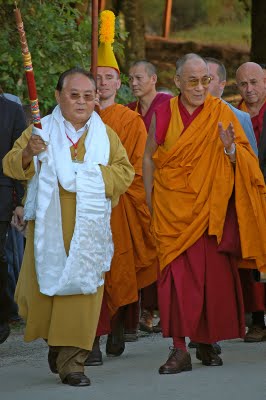
Bhumi Study Series presents information on many of the contemporary gurus, lamas and spiritual teachers, and their respective spiritual attainments, or bhumis. This study has been conducted by two founding teachers of the Open Heart-method, Kim Katami and Pauliina Katami on the basis of photographs available about the concerned persons. For more info on Open Heart, go to http://www.openheart.fi

Familiarizing yourself with the Open Heart bhumi-system is recommended, in order to understand what this series is about. Read "Stages of Spiritual attainment" and go through Kim Katami's video documentation on the topic to get a better picture of what bhumis are. Studying and understanding bhumis in this manner is a deep subject which requires meditation and analytical skills. One may or may not be able to discern the outcome of this study series without extensive practice experience. On the other hand, the differences are quite easily seen when studied attentively and when the information is offered in context as has been done here, where one may compare between teachers, right next to each other. The study has been divided into several categories. As the Open Heart-bhumi model is universal, it applies regardless of possible differences in methods used by distinctive traditions.

This Bhumi Study Series has been made public in order to bring awareness, lucidity and clarity to the present spiritual culture of the world by explaining and showing what many of our well known teachers have actually been able to attain. There is much confusion about this topic, so we wanted to clarify this matter from our part, for the benefit of all.  

May this study help and serve many in their understanding and study of the path of mind training.


Bhumi Study Series

Bhumi Study Series, Part 1: Before and after awakening, and 2nd-5th bhumisBhumi Study Series, Part 2: 6th bhumis with notes
Bhumi Study Series, Part 3: 7th bhumis
Bhumi Study Series, Part 4: 8th bhumis
Bhumi Study Series, Part 5: 9th bhumis  
Bhumi Study Series, Part 6: 10th bhumis
Bhumi Study Series, Part 7: 11th bhumis 
Bhumi Study Series, Part 8: 12th bhumis
Bhumi Study Series, Part 9: 13th bhumis  
Bhumi Study Series, Part 10: From Zero to Mahasiddha Bhumis
Extra: How to do Bhumi Mapping


11th bhumis

You can find pictures of some of the people below in their lower bhumis from the previous episodes of the Bhumi Study Series.


maanantai 22. elokuuta 2016

Meeting Sakya Trizin

Meeting Sakya Trizin

In August of 2016 I had the opportunity to join Sakya Trizin's teachings at Helsinki, Finland. Sakya Trizin is the head of the Sakya school of Tibetan buddhism which is one of the four main schools of tantric buddhism of Tibet. You can find information about him by googling.

As such a high profile representer of vajrayana buddhism was in town I wasn't going to miss the opportunity to go and see if my analysis of him with the Open Heart Bhumi Model was correct or mistaken. In this episode of Bhumi Study Series, I've mapped him as 9th bhumi (9/13) which makes him a mature bodhisattva. Mapping for the mentioned series has been done solely on the basis of his photography.

Sakya Trizin taught at Helsinki on four separate days. The teachings covered the very basics of mahayana buddhism such as preciousness and transitoriness of human life, need for dharma practice and so on. The lectures were preceded by prayers and sutras read in Tibetan and other languages. The venue was a classy one which they had decorated with the regalia of a traditional Tibetan buddhist temple. ”Tibetans sure can put up a show”, Alan Wallace said.

I seldom join events that are highly religious and glad in particular cultural attire. And it always surprises me. This time as well. The same thing happens to me everytime I go to these grandiose churches in central Europe. ”Wow... What a setting... How did they come up this!? It must have taken them a full day to build the whole thing up. Now, let's see what they teach!”

I joined Sakya Trizin's sessions on two separate days, for 3 hours at a time. On the second occasion I also had the chance to stand just 2-3 meters of him for about 2 minutes when he was on his way to the throne.

The moment he came in, I clearly felt that he still is 9th bhumi, as myself. However, he is a mature 9th bhumi while myself am a newly hatched. This being the case, his presence had no effect of clarification or elevation to my mind which always happens in the company of a person who is spiritual more advanced than you are. That didn't happen, the conclusion being that the OHBM worked once again. I have also tested my bhumi analysis in the physical company of Amma, the Hugging Saint whom I have rated as 13th bhumi, fully enlightened buddha. So far, after publishing the model I have not met other teachers whom I have rated.

I'd like to mention one particular thing about this and other buddhist events, in regards to mahasiddha bhumis.

What happened at this event was that when buddhist sutras and prayers, along with prayers to Buddha Shakyamuni and the Three Jewels (buddha, dharma and sangha) were read, instantly there was a high spiritual charge in the room of the mahasiddha bhumis. It lasted for the time when these prayers were read, both before and after the lengthy lectures given by Sakya Trizin.

I once witnessed the same thing happen at a zen buddhist retreat where a zen-teacher conducted a ceremony of giving the so called lay percepts to a couple of practitioners. The charge was so beautiful, so fresh and full for the duration of the ceremony. Shakyamuni's presence was palpable. After the ceremony I asked the zen-teacher if he was aware of this subtle charge. He honestly answered he was not.

To me personally, from one perspective it was interesting to go and be in the presence of this archbishop of Tibetan buddhism who is largely regarded as a living buddha. We don't get such opportunities often here up north. On the other hand, with all love and respect, it was boring as hell. 2½ hour long lectures on the absolute basics of buddhism where you keep hearing the same exalted things over and over, well, made me sleepy and bored.

I've witnessed exactly the same type of dharma events in Finland several times, taught by several rinpoches, during the last two decades. I can't help thinking how it is possible people do not demand to be taught something more visceral, something more real and less religious. Perhaps it's just me but I have hard time understanding why people are not taught pragmatically. I've never been a fan of ancient religions especially if they are said to get one fully enlightened. Perhaps people who join these events have no need to know. Perhaps they are not confused in existential sense, they way I used to be. If this is the case then the teachings offered might be exactly what they need. And I'm just an angry fool let down by my own frustrations.

Anyway, there is a long way from prayers recited in completely foreign language (Tibetan) to experiential understanding the principles behind it. Therefore I doubt people ”get it”, get awakened or enlightened this way. For sure, there is some benefit and transformation from doing such practices in the way they were taught, which is wonderful, but I often wonder the purpose and effect of the whole thing. I feel these traditional schools of Tibetan buddhism are like ancient dinosaurs brought to modern environment.

Nonetheless, I wish all the best to anyone involved.

  • Kim Katami, 22.8.2016

Open Heart, www.openheart.fi